Charred Scallion and Kimchi Carbonara: The Weeknight Flavor Bomb
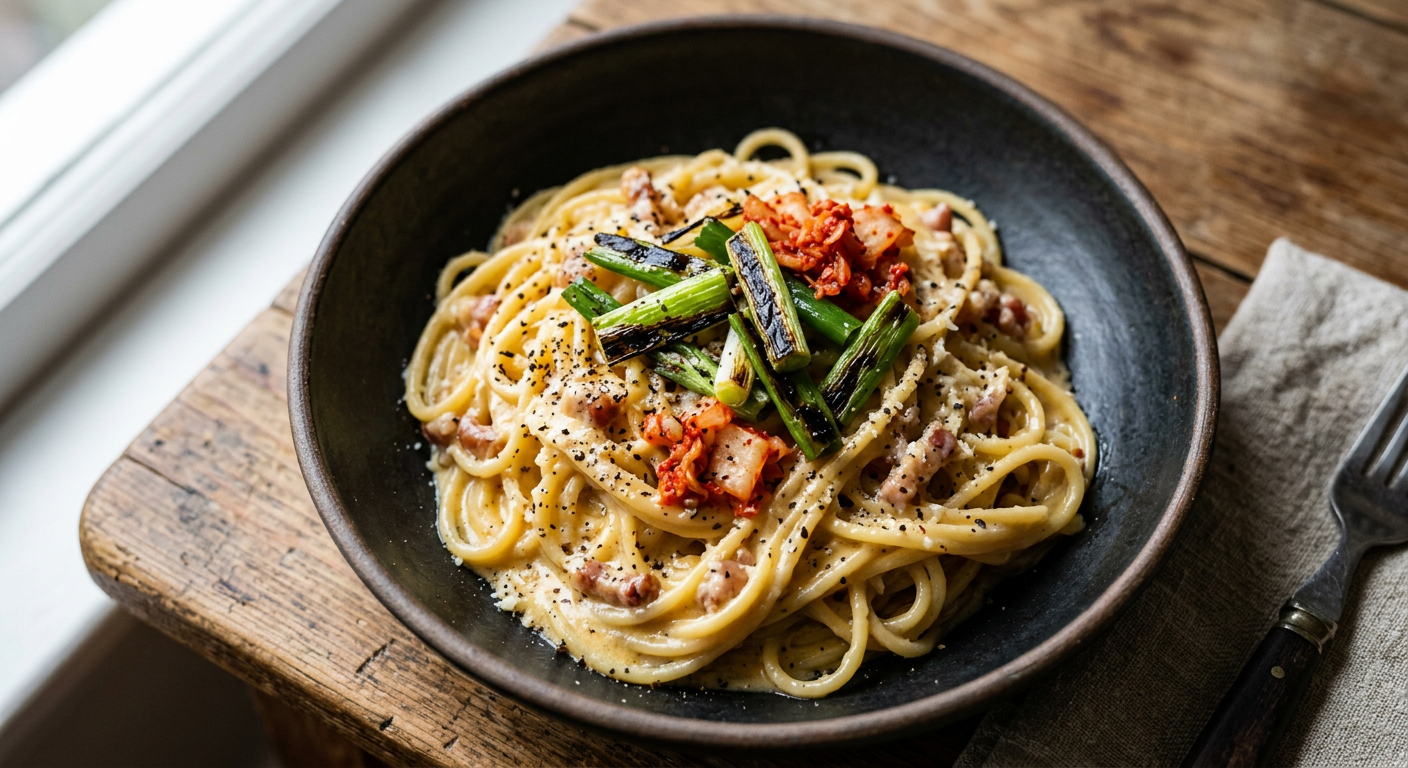
A smoky, funky twist on the Roman classic that swaps traditional guanciale for charred scallions and punchy kimchi.
Total time
22 minutes
Serves
4 servings
Difficulty
Medium
Estimate
485
The Soul of the Dish
Carbonara is usually a sacred topic in the culinary world, often guarded by purists who insist on only four ingredients: pasta, pecorino, eggs, and guanciale. But at BareCookin, we believe the *spirit* of carbonara—the creamy, emulsified sauce and the sharp hit of salt and fat—is a perfect canvas for broader flavors. This version replaces the cured pork with deeply charred scallions and fermented kimchi. The result is a bowl of pasta that hits every single taste bud: savory, spicy, sour, and rich.
Why This Works
The magic happens in the pan. By charring the white and light green parts of the scallion until they are almost blackened, you develop a natural smokiness that mimics the depth of cured meat. Adding kimchi provides an acidic counterpoint to the heavy egg yolks, cutting through the richness and keeping your palate refreshed between bites. It’s a 15-minute meal that tastes like it took hours of slow-simmering flavor development.
The Logic of the Emulsion
The most intimidating part of any carbonara is the risk of ending up with scrambled eggs. The science here is simple: heat management. We aren't "cooking" the eggs over a flame. Instead, we are using the residual heat of the cooked pasta and a splash of starchy pasta water to gently cook the yolks into a glossy, thick sauce. If your pan is too hot, the proteins in the egg will tighten and clump. If it's too cool, the sauce will stay watery and raw. The sweet spot is a warm bowl or a pan that has been off the heat for at least 30 seconds.
Cooking Safety and Handling Kimchi
When working with fermented foods like kimchi, always ensure you are using a clean fork to remove it from the jar to prevent cross-contamination and spoilage. In this recipe, we are sautéing the kimchi briefly. This mellows the aggressive vinegar bite and concentrates the sugars.
Important Safety Note: Ensure your eggs are fresh and handled properly. While the residual heat of the pasta cooks the eggs to a safe temperature for most, those with compromised immune systems should use pasteurized eggs for this preparation. Never leave the finished dish at room temperature for more than two hours.
Common Pitfalls to Avoid
- Draining all the water: People often dump their pasta into a colander and let all that liquid gold go down the drain. You need that starchy water to bind the fat from the butter/kimchi juice to the egg yolks. Always reserve a cup before draining.
- Using pre-shredded cheese: Pre-bagged parmesan is coated in cellulose (an anti-clumping agent). This prevents the cheese from melting smoothly into the sauce, resulting in a gritty texture. Grate your own from a block.
- Under-charring the scallions: Don't be afraid of a little black on the edges. That char is where the "bacon" flavor lives.
Flavor Logic and Substitutions
If you want to keep this strictly vegetarian, ensure your kimchi is vegan (traditional kimchi often contains fish sauce or salted shrimp). If you aren't worried about meat, adding a bit of chopped bacon or pancetta alongside the scallions certainly won't hurt, but the goal here is to let the vegetables do the heavy lifting.
For the pasta, long strands like Spaghetti, Linguine, or Bucatini are best because they offer more surface area for the sauce to cling to. Short shapes like Rigatoni work in a pinch, but you lose that iconic "slurp" factor.
Storage and Reheating
Carbonara is notorious for not reheating well because the eggs solidify when blasted in a microwave. If you have leftovers, the best way to revive them is in a skillet over low heat with a tablespoon of water or milk, stirring constantly until just loosened. However, this is truly a dish meant to be eaten immediately while the sauce is at its peak silkiness.
Ingredients
- 12 oz (340g) Spaghetti or Bucatini
- 2 tablespoons neutral oil (grapeseed or avocado)
- 1 bunch scallions, sliced into 2-inch pieces
- 1 cup cabbage kimchi, drained and roughly chopped
- 3 large eggs, room temperature
- 1 cup freshly grated Parmesan or Pecorino Romano
- 1 tablespoon kimchi juice (reserved from the jar)
- 1 teaspoon toasted sesame oil
- Freshly cracked black pepper to taste
- Toasted sesame seeds for garnish
Instructions
- Bring a large pot of salted water to a boil. Cook the pasta according to package directions until just al dente. Do not overcook, as it will continue to cook in the pan later.
- While the pasta cooks, whisk the eggs, grated cheese, and kimchi juice in a medium bowl until combined. Set aside.
- Heat the neutral oil in a large skillet or wok over high heat. Add the scallion pieces and sear them without moving for 2 minutes until they develop dark, charred spots. Stir and cook for 1 more minute.
- Lower the heat to medium-low. Add the chopped kimchi to the skillet with the scallions and sauté for 3-4 minutes until softened and fragrant.
- **Crucial Step:** Before draining the pasta, reserve 1 cup of the starchy pasta water. Drain the pasta.
- Turn the heat under the skillet to 'Low'. Add the hot pasta directly to the skillet with the kimchi and scallions. Toss to coat in the oil.
- Remove the skillet from the heat entirely. This prevents the eggs from scrambling.
- Pour the egg and cheese mixture over the pasta. Quickly begin tossing with tongs, adding the reserved pasta water 1 tablespoon at a time. Continue tossing for 1-2 minutes until the cheese melts and the eggs form a creamy, glossy sauce that coats every strand.
- Drizzle with toasted sesame oil and add plenty of cracked black pepper.
- Serve immediately while hot and silky.
Nutrition estimate
- fat: 18g
- fiber: 4g
- sodium: 850mg
- protein: 22g
- calories: 485
- carbohydrates: 62g
Tips
- Use 'Old' Kimchi: The more fermented and sour the kimchi, the better the flavor profile will be.
- Grating Matters: Use a microplane or the fine side of a box grater for the cheese. Pre-shredded cheese is coated in potato starch and won't melt smoothly into the sauce.
- The 'Off-Heat' Technique: If you aren't confident, mix the pasta and eggs in a separate large mixing bowl instead of the hot skillet to ensure the eggs don't curdle.
Swaps
- Vegan Option: Use a mixture of silken tofu blended with nutritional yeast and turmeric instead of eggs.
- Gluten-Free: Use high-quality brown rice spaghetti.
- Protein Add-on: Crispy bacon or pancetta can be added back in if you crave the traditional meat element.
Storage and reheating
- Carbonara is best enjoyed immediately. However, leftovers can be kept in an airtight container for up to 2 days. To reheat, add a splash of water and heat gently on the stovetop over low heat, stirring constantly to prevent the egg from drying out.
Don't fear the emulsion! Even if it takes a few tries to get that perfect silky finish, the flavors of this dish are so forgiving and bold that it will taste incredible regardless. You've got this!